Two models can own the same phone, sit in the same size bedroom, and stream to the same platform. One looks like a professional. The other looks like a hostage video. The difference is almost never the phone. It is where the light is standing.
Light is the cheapest upgrade in this entire business. Before you spend anything on outfits, backdrops, or a better camera, get the light right. Your phone's camera is already good. It is just starving in the dark, and a starving camera makes noisy, muddy, gray video no matter what it is pointing at.
The one rule that fixes almost everything
Light comes from IN FRONT of you, raised above your eye level. Never from behind you.
That is the whole religion. Everything below is just that rule with photos. If you remember nothing else, walk into your room tonight, find your brightest light, and put it in front of your face, a little higher than your eyes, pointing gently down. You just beat half the models on the platform.
The mistake that ruins the most streams
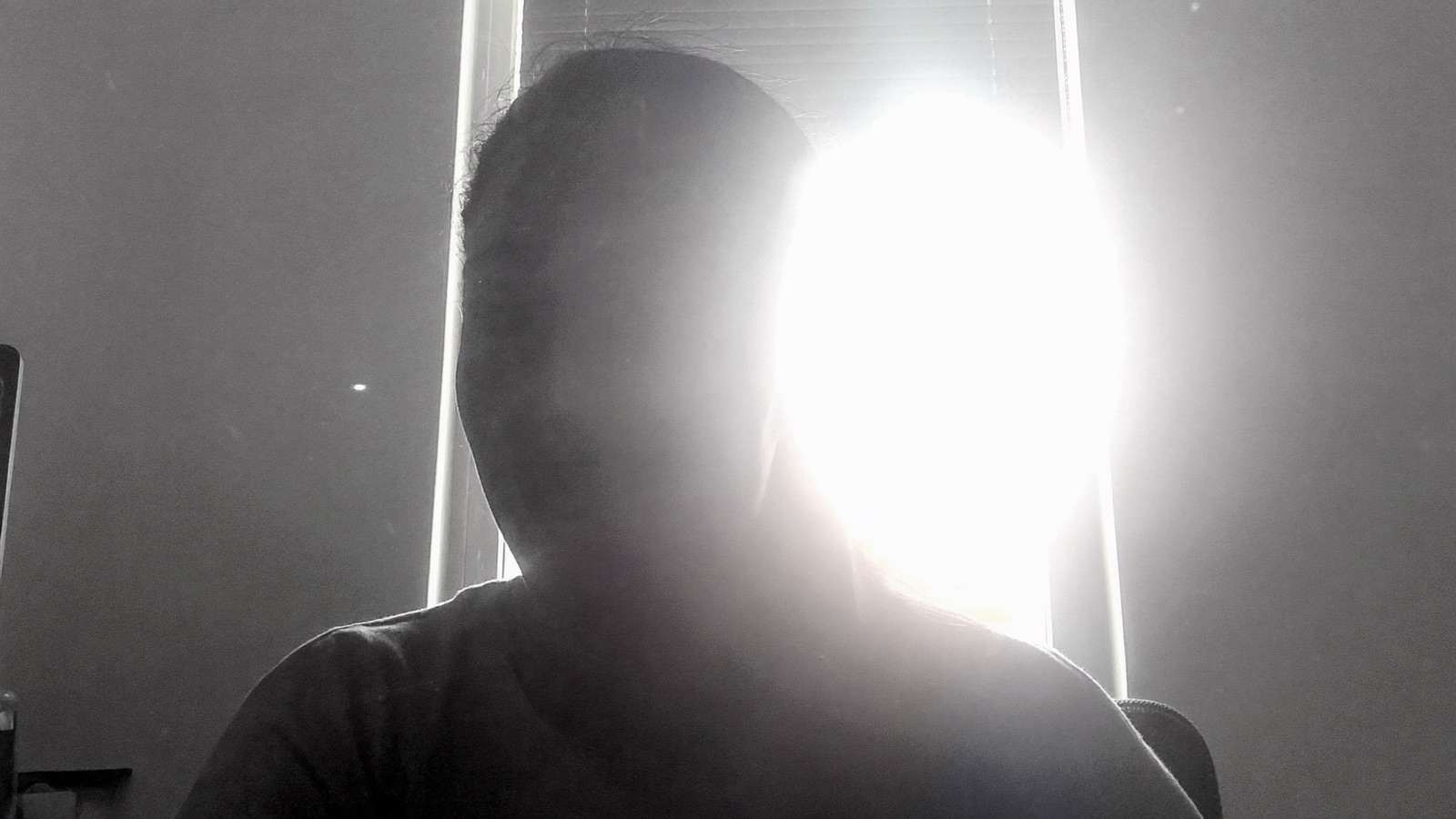
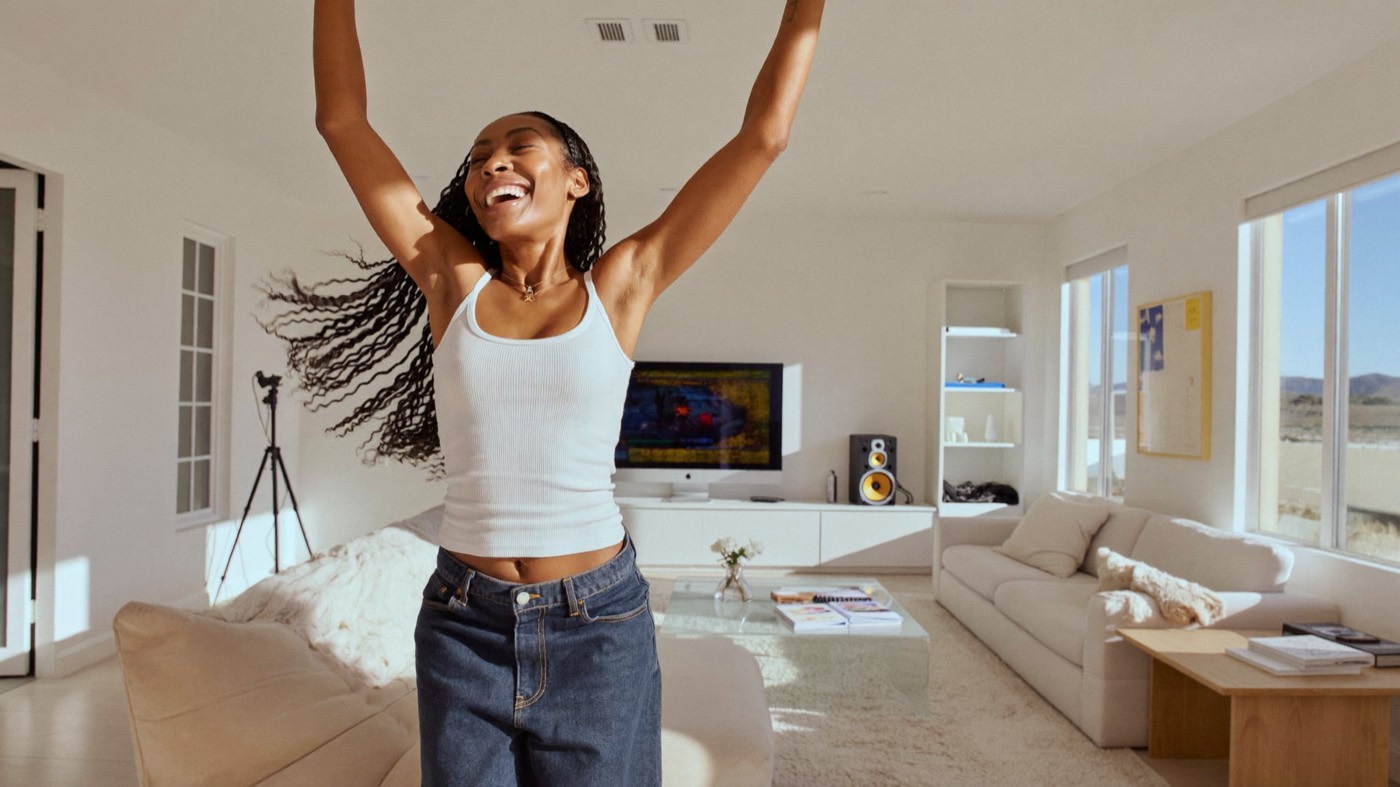
This is a window behind the model, and it is the number one lighting mistake in camming. A lamp behind you does the same thing. Here is why it fails: a camera can only expose for one brightness at a time, and it always protects itself from the brightest thing it can see. If the brightest thing is behind you, the camera exposes for that, and you become the dark shape in front of it. Your face, your expressions, your smile, everything a regular falls for, gone.
A viewer scrolling past sees a shadow, not a person. Nobody tips a shadow. If your only window is behind your streaming spot, turn your setup around, or stream after dark and let your lamps do the work.
The second mistake: the ceiling bulb

Most rooms have exactly one light: a bulb in the middle of the ceiling. Streaming under it feels natural because it is what you have. But look at what the camera sees. The light hits the top of your head and your forehead, drops shadows into your eye sockets and under your chin, and leaves your face dim and flat. The camera then boosts itself to compensate, which adds grain and washes out your skin tone.
The ceiling bulb is fine as background room light. It just cannot be your main light. Your face needs its own light, and that light needs to be in front of you.
Right way one: the front light, raised
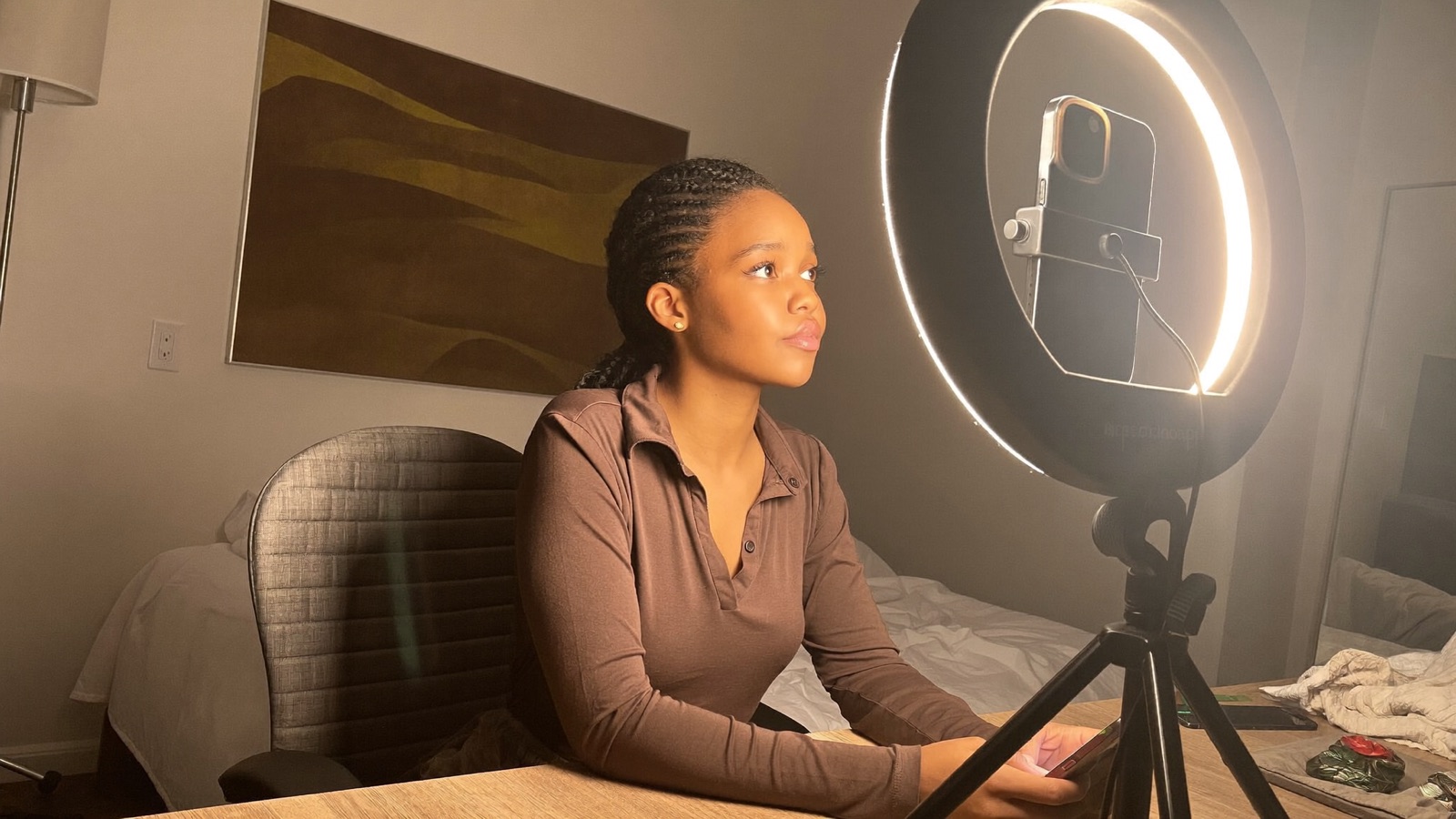
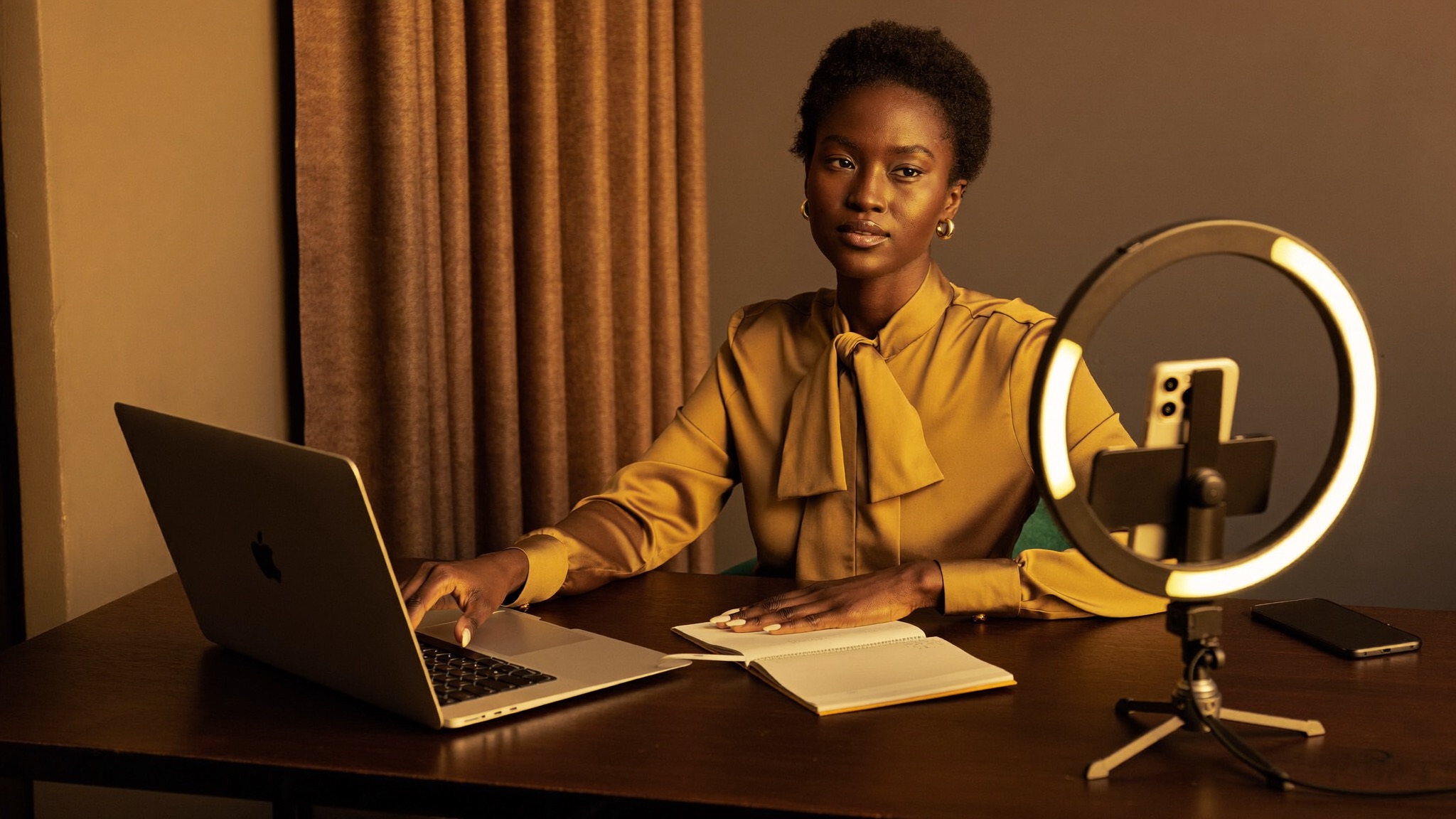
This is the standard setup, and there is a reason every serious streamer on earth uses it. A ring light with your phone mounted in the middle means the light and the camera come from the same direction, so your face is lit evenly with no strange shadows, and looking at the camera means looking into the light.
Placement matters more than the equipment:
- Height: the center of the light sits slightly above your eye level, tilted a few degrees down toward you. Light from below does the opposite of light from above: it is horror-movie light. Never light yourself from under your chin.
- Distance: about an arm's length to a little more. Too close blows out your skin, too far and the room light takes over.
- Brightness: bright enough that your face is clearly the brightest thing in the frame, soft enough that you are not squinting. Most ring lights have a dial. Warm-white usually flatters darker skin better than cold blue-white.
Right way two: the high side light
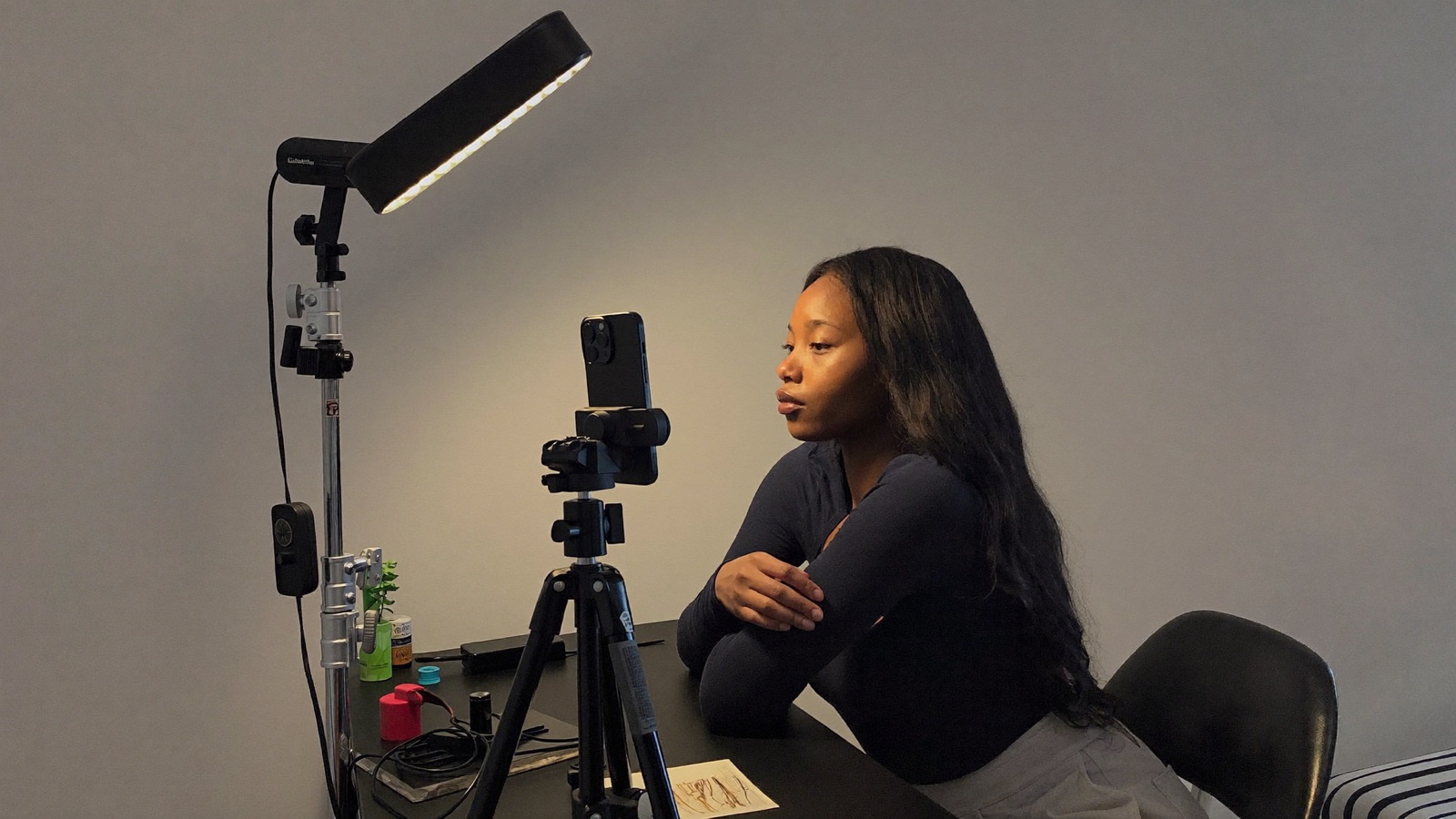
Once you are comfortable, this is the upgrade. Move the light off to one side, about forty five degrees around from your camera, still raised above eye level, still angled down. Photographers have used this angle for a hundred years because it shapes the face: one side glows, the other carries a soft shadow, and suddenly there is depth and mood instead of flat passport-photo light.
The rule about height still applies. High and to the side is glamorous. Low and to the side is a torch under your face. The light should always be looking slightly down at you, the way a window does.
The finishing touch: light behind you that is NOT pointed at the camera
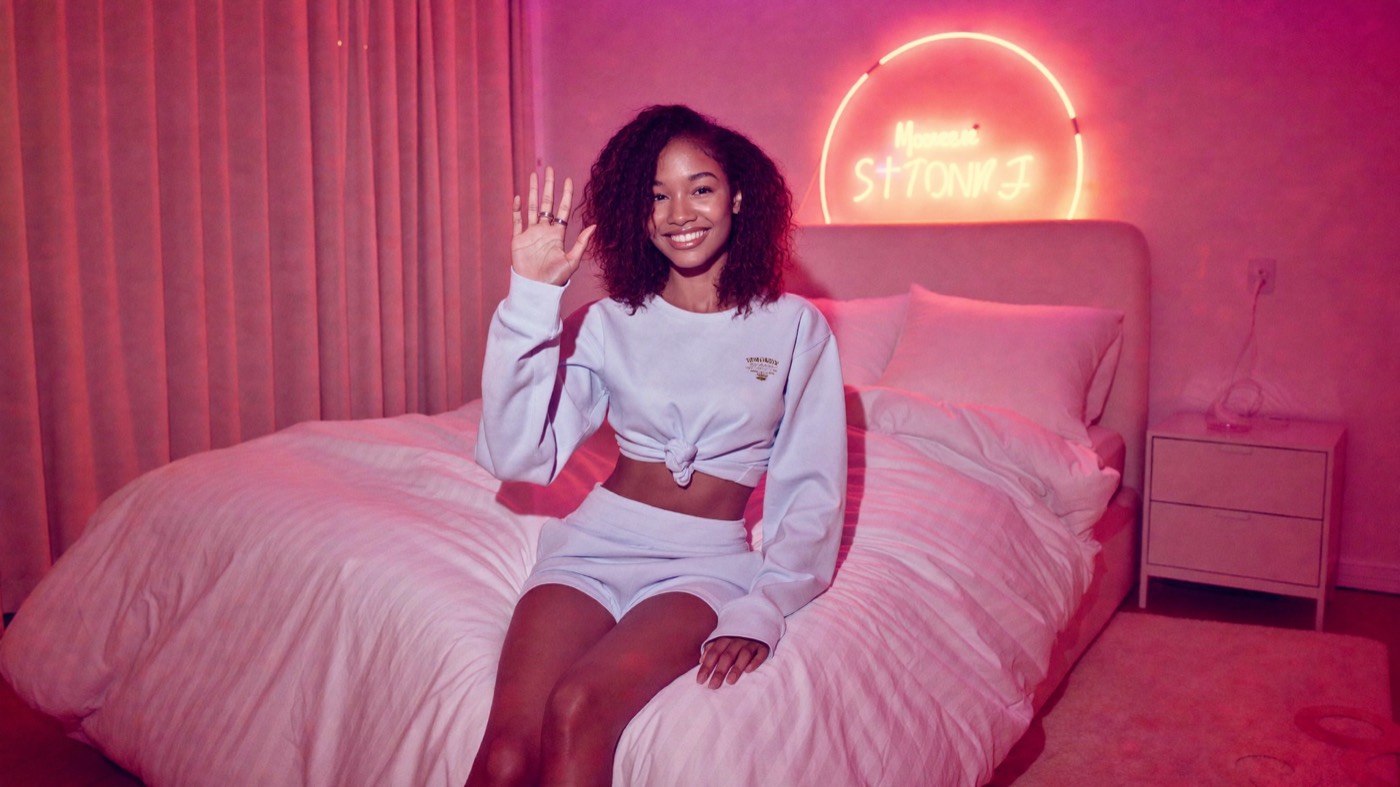
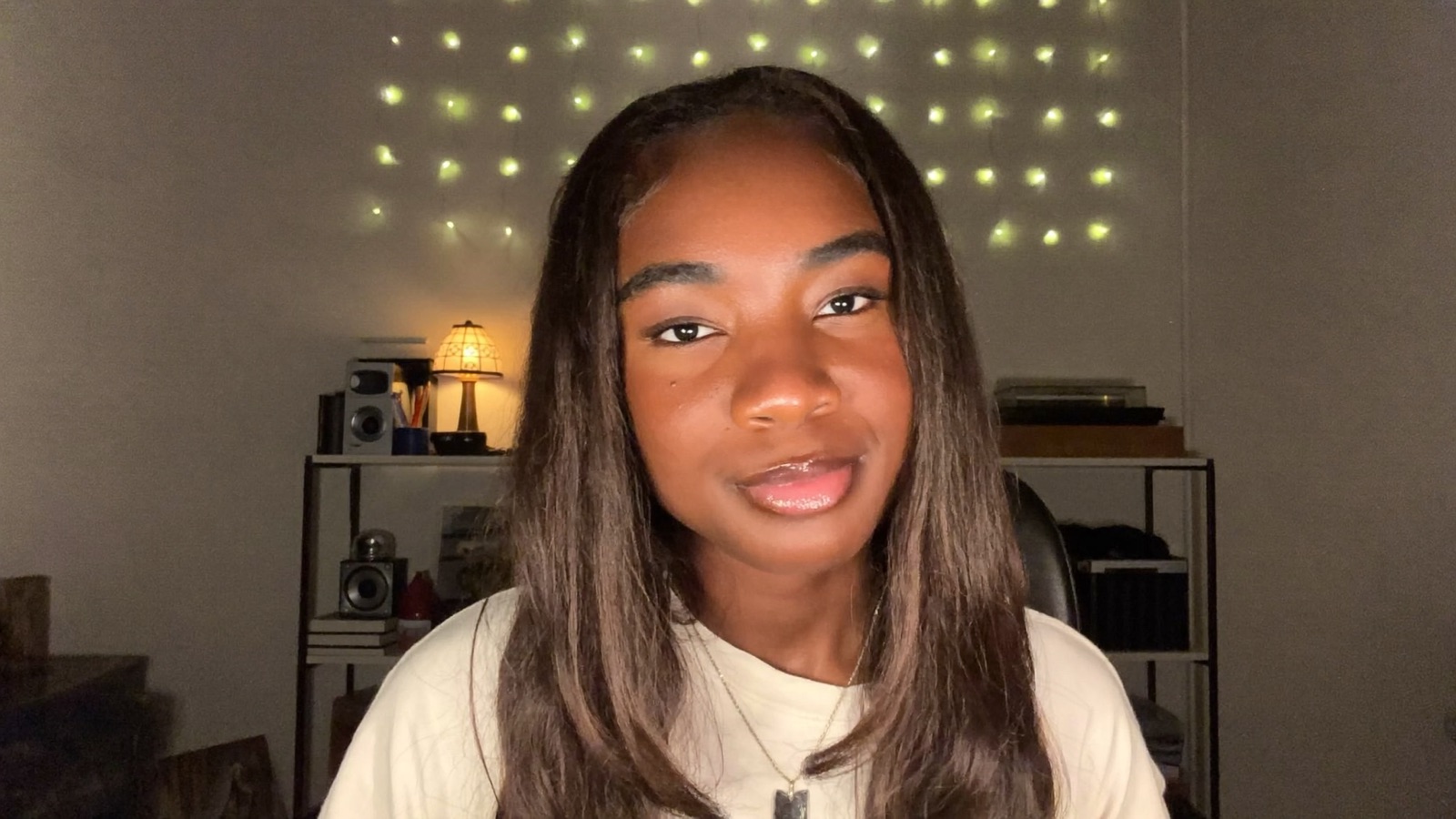
Wait, light behind you? Did we not just ban that? Read the first photo again: the ban is on bright light pointed AT the camera. This is different. These are small, soft lights that glow in the background without shining into the lens: fairy lights on the wall, a small lamp on a shelf, a soft strip of LED behind the bed.
What they do is separate you from the background. Without them, a front-lit model in a dark room floats against a black nothing, and the frame looks flat. With a little glow behind you, the room has depth, the scene looks warm and inviting, and you stand out from the background like the subject of the shot, which is exactly what you are. This is the detail that makes viewers stop scrolling, even if they could not tell you why.
Keep background lights dimmer than your face. Your face is the star. The background is the set.
- Main light in front of you, above eye level, angled down
- Or high and to the side at forty five degrees
- Face clearly the brightest thing in frame
- Small soft lights glowing in the background
- Window or lamp behind you shining at the camera
- Ceiling bulb as your only light
- Any light pointing up at your chin
- Background lights brighter than your face
Why it pays: viewers decide in two seconds whether to stay. A lit face reads as a person. A silhouette reads as a skip.
You do not need expensive equipment
A basic ring light with a phone holder costs less than one good night of tips and lasts for years. Until you get one, a desk lamp bounced off the wall in front of you beats a ceiling bulb, and a window IN FRONT of you is the best free light in the world. The gear matters far less than the geometry: in front, high, angled down, small glow behind. That is the whole setup.
Want your whole setup reviewed before you go live?
We are a US-based agency for African creators. Lighting, framing, greeting, pricing: we coach the whole craft, and some nights we are online with you while you stream. All in your name, and we never touch your money.
Apply in two minutes